hand doctor

Carpal Tunnel Surgery Risks

What Are the Risks of Carpal Tunnel Release?

What Are the Risks of Carpal Tunnel Release?

If you have carpal tunnel syndrome or any other medical problem, you may be thinking about a surgical procedure. With modern technology, surgical procedures to treat serious medical problems are improving every year. Scientific studies, new techniques and devices, better understanding of medical problems all help to improve the surgical care provided.

But you may still feel nervous about having surgery!

This is very normal. Most patients who have a surgical procedure report feeling nervous at some stage of the planning process. This is why it is very important to see a well-trained specialist about the problem that you are having.

If your problem is carpal tunnel syndrome, North Carolina Carpal Tunnel Specialist Dr. Johnny T. Nelson, MD is the well-trained specialist for you!

Dr. Nelson takes pride in spending time with every patient, making the best decision for them based on their plans, needs, and special situations. He also takes pride in listening closely to questions and concerns, especially when surgery is being considered. When a carpal tunnel release is considered, Dr. Nelson discusses the risk of surgery with every patient.

It is helpful to think about surgery likely think about driving a car. Every time we get into a car or leave our house, we are taking a risk. It is always possible that something bad can happen. The risk is very, very small, but the risk does exist!

Carpal tunnel release with ultrasound guidance helps to make sure that the risk is as small as possible!

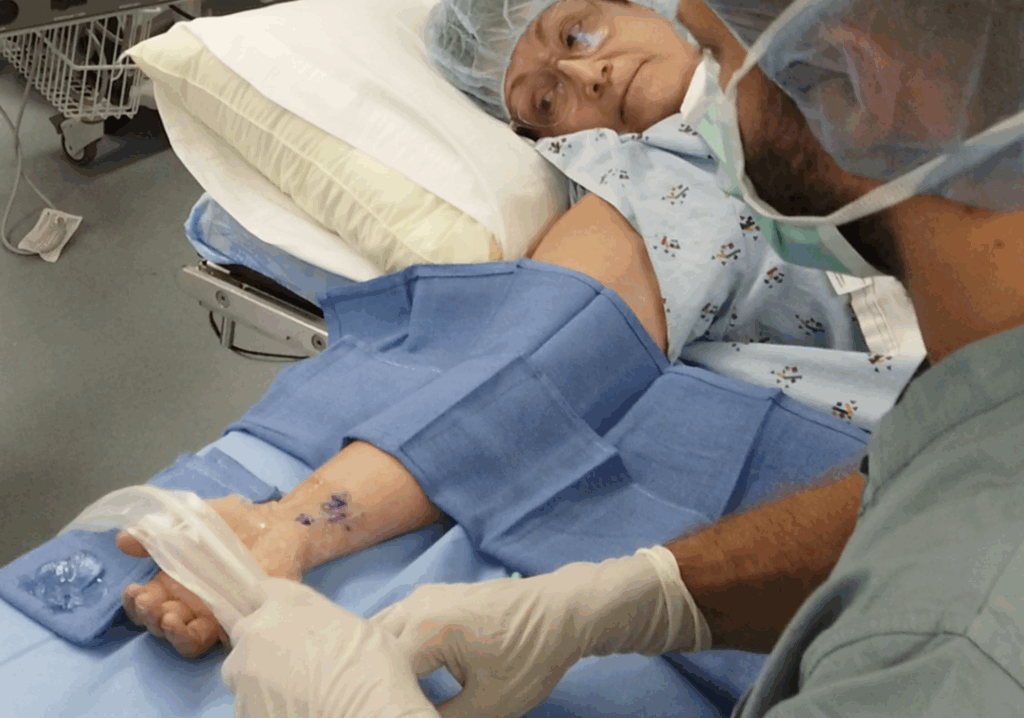
Because there is no anesthesia, the risk of anesthesia is much lower. Anytime there is an incision, there is a risk for infection. But the smaller the incision, the smaller the risk for infection. The 5 mm poke incision used for ultrasound-guided carpal tunnel release is extremely small. When surgery is performed, there is always a risk of damage to other structures, such as tendons, nerves, or blood vessels. Because carpal tunnel release performed by Dr. Nelson is done under ultrasound guidance, he can see all of the structures all at once, and keep them all safe.

If you have carpal tunnel syndrome and are ready to get rid of your symptoms for good, call 919-872-5296 today to schedule a visit with Dr. Johnny T. Nelson, MD, Raleigh, North Carolina, shoulder and carpal tunnel specialist!

What Are the Risks of Carpal Tunnel Release? Read More »
backtowork

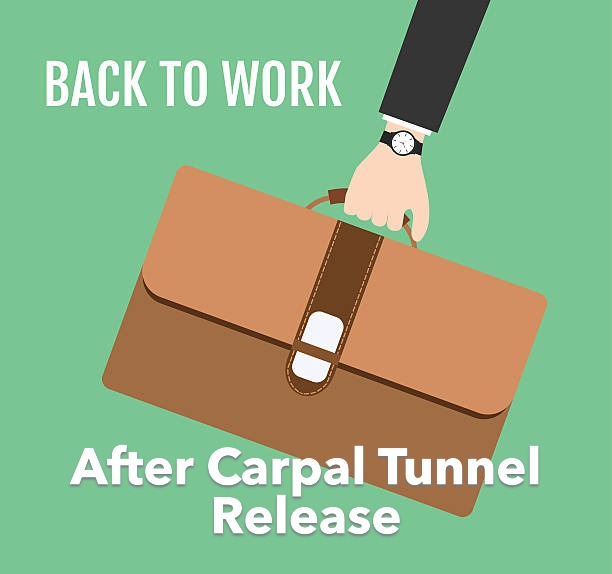
When Can I Return to Work after My Carpal Tunnel Release?

When Can I Return to Work after My Carpal Tunnel Release?

When Raleigh, North Carolina Carpal Tunnel Specialist Dr. Johnny T. Nelson, MD hears this question, he responds with a question: What do you do for work?

If you have carpal tunnel syndrome or are considering a carpal tunnel release, chances are you are planning to have a minimally invasive ultrasound-guided carpal tunnel release.  Although there are other options, carpal tunnel release with ultrasound guidance allows for quick relief of carpal tunnel symptoms without the need for IVs, anesthesia, sutures, splinting, therapy, and…you guessed it: work restrictions!

But when it comes to returning to work after a carpal tunnel release, there are a few other things to consider.

Since 2022, North Carolina carpal tunnel specialist Dr. Johnny T. Nelson, MD has performed over 700 carpal tunnel releases with ultrasound guidance.  Many of these patients were very busy hairdressers, plumbers, welders, electricians, and delivery drivers.  And many of these patients went back to work at 1 to 3 days after the procedure!

While many of these patients had mild soreness in the palm, they were able to return to work because even their heavy work activities cannot do “damage” to the work that was done.  Some of these patients did use oral medications like Tylenol or anti-inflammatories at first to allow them to work in comfort.  After a few weeks, most of these patients reported being back to normal and no longer needing any medication.

Patients who work “desk jobs,” such as clerks, secretaries, receptionists, salespeople, and other similar professionals can easily return to work after 24 hours.

Studies do show that after a carpal tunnel release, pinch and grip strength does decrease for a short time.  During this time, if you work a heavy job, your performance may not be normal.  As your hand continues to heal, pinch and grip strength returns to normal.  Soon, your job performance will also return to normal.

Dr. Nelson also recommends that in the first 24 hours after carpal tunnel release with ultrasound guidance, the hand or hands are kept elevated and ice is used.  During this time, it is not recommended to work.  But after 24 hours, activities can be restarted “as tolerated,” meaning that as long as you are comfortable performing the activity, you can do it.

If you have carpal tunnel syndrome and are worried about the time it takes to return to work after a carpal tunnel release, call 919-872-5296 today to schedule a visit with Dr. Johnny T. Nelson, MD.

When Can I Return to Work after My Carpal Tunnel Release? Read More »

sleepcarpaltunnel

Why Are Carpal Tunnel Symptoms Worse At Night?

Why Are Carpal Tunnel Symptoms Worse At Night?

If you have carpal tunnel syndrome, it is very likely that you are feeling discomfort.  This discomfort is different in different patients.  Raleigh, North Carolina, carpal tunnel expert Dr. Johnny T. Nelson, MD understands that carpal tunnel syndrome and similar nerve problems come in different “flavors.”

The most common symptom that patients feel is pain, numbness, tingling in the hands at night.  Carpal tunnel syndrome and similar nerve problems are special in this way. They almost always bother you more at night.

But why does carpal tunnel syndrome and carpal tunnel symptoms seem to be worse at night?

The answer is complex, but there are several explanations.

First of all, during the day our brains are very active.  Multiple signals are coming and going from the brain to the limbs, and from the limbs to the brain.  There are external noises, people moving around this, work we need to do, and other feelings coming from all sides.  However, at night, a lot of this “noise” quiets down.  As a result, nerve problem such as carpal tunnel syndrome are no longer “drowned out” by the noise.  As a result, the carpal tunnel “noise” seems louder and more painful.  This is why patients with carpal tunnel syndrome report waking up at night, hanging their hands off the edge of the bed, and flicking or shaking their hands and fingers.

The second explanation has to do with being still while we sleep.  During the day, we are using our hands, moving our arms to do things like to eat, drink, work, drive a car, and play with her children.  This motion helps to keep fluid and blood from building up in her hands and feet.  The movement of the muscles and joints actually helps to “pump” swelling back to the heart.  But at night, when we are still, fluid and swelling tends to build up in our hands and feet.  As a result, this small amount of swelling can “crowd out” the carpal tunnel nerve and make carpal tunnel symptoms worse.

Finally, when we sleep we tend to “curl up like a baby.”  We like to clinch our fists, bend our wrists and elbows close to our body.  These positions, although they are comfortable, actually increase pressure on the carpal tunnel nerve.  In fact, when Dr. Johnny T. Nelson, MD is testing you for carpal tunnel syndrome, one of the movements he tests is to bend the wrist and hold it in this position.  If this creates carpal tunnel symptoms or makes them worse, you have carpal tunnel syndrome.

If you have carpal tunnel syndrome and are having a hard time sleeping, call 919-872-5296 today to schedule a visit with North Carolina Carpal Tunnel Expert Dr. Johnny T. Nelson, MD.

Why Are Carpal Tunnel Symptoms Worse At Night? Read More »

cthowisthatpossible

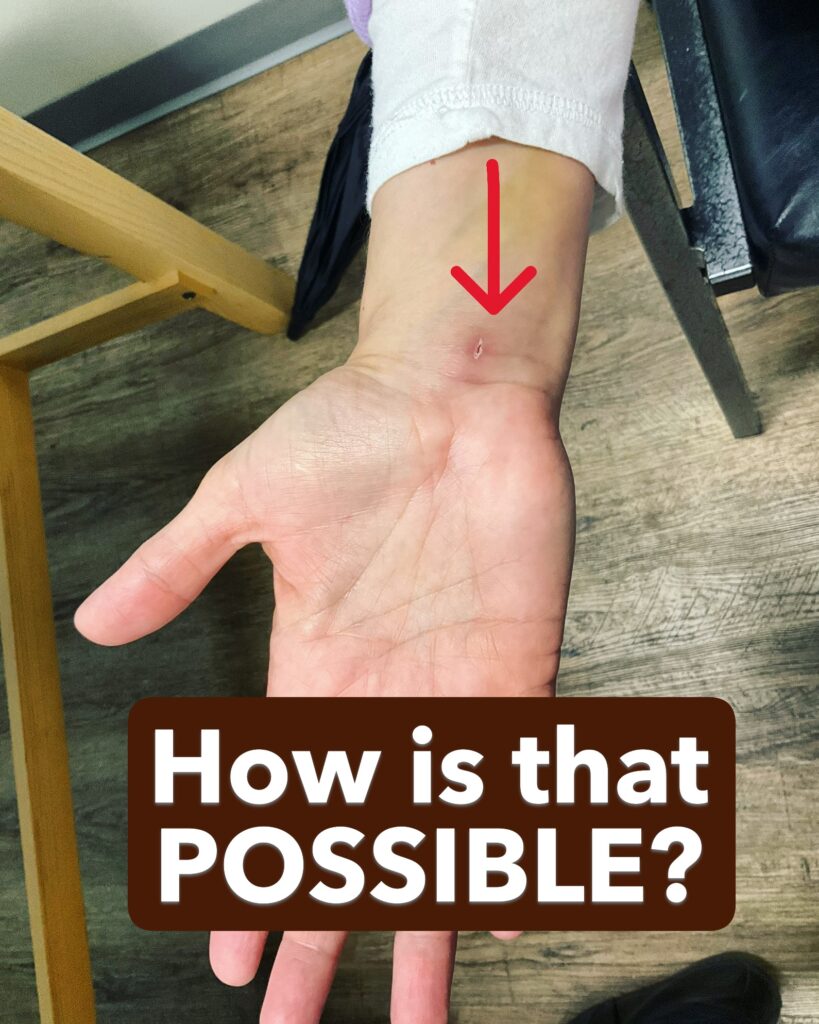
Carpal Tunnel Release Through A Tiny Skin Poke: How Is That Possible?

Carpal Tunnel Release Through A Tiny Skin Poke: How Is That Possible?

If you have carpal tunnel syndrome or are thinking about a carpal tunnel release procedure, you may have questions about your incision!

Carpal tunnel release is a time-tested surgery that cures carpal tunnel syndrome for good.  It has very high success rates.  There are also many different ways to perform a carpal tunnel release.  If you are scheduled to have a carpal tunnel release surgery, you should ask your surgeon what type of release will be performed and what your incision will look like.

Raleigh, North Carolina, Carpal Tunnel Specialist Dr. Johnny T. Nelson, MD specializes in advanced ultrasound-guided surgery.  As a result, this special skill allows Dr. Nelson to perform a carpal tunnel release through a 5 mm “poke” in the skin of the wrist.

How is this possible?

All carpal tunnel release procedures do the same thing.  The goal of a carpal tunnel release is to open a special band inside the wrist that allows the carpal tunnel to grow slightly wider.  When the tunnel grows slightly wider, the carpal tunnel nerve has more room to “breathe.”  So whether your surgeon performs an open carpal tunnel release or an ultrasound-guided carpal tunnel release, the goal is the same.

But what is different is how they get there!

Open carpal tunnel release arrives at the special ligament by going through the skin of the palm.  To do this, an incision is necessary in the thick skin of the palm, which has more nerve endings.  Other structures have to be cut through as well, including a special tissue called “fascia” deep to the skin.  Dr. Johnny T. Nelson, MD describes the skin and the fascia as “innocent bystanders.”  They do not cause carpal tunnel symptoms but need to be cut through for a open carpal tunnel release.

On the other hand, carpal tunnel release with ultrasound guidance allows the most targeted treatment possible.  Through a tiny 5 mm poke incision, Dr. Nelson is able to release the special ligament only.  There is no incision on the palm skin, and there is no “innocent bystander” tissue!  Think of this as performing carpal tunnel release from the “inside out.”  This is not possible without a special camera or an ultrasound machine.

So how is it possible?  It is possible because of ultrasound!

If you have carpal tunnel syndrome, numbness, tingling at night or during the day, call 919-872-5296 today to schedule your visit with Dr. Johnny T. Nelson, MD.


Carpal Tunnel Release Through A Tiny Skin Poke: How Is That Possible? Read More »

How Does a Carpal Tunnel Release Work?

How Does a Carpal Tunnel Release Work?

How Does a Carpal Tunnel Release Work?

To understand how carpal tunnel release works, it is important to understand the problem of carpal tunnel syndrome.

Carpal tunnel syndrome is caused by pressure on a very important nerve at the level of the wrist. This nerve is called the median nerve.

At the level of the wrist, the median nerve passes through a “tunnel,” along with several important tendons that move the fingers and the thumb. This tunnel cannot change in size, it cannot grow wider or more narrow as needed. Because of this, if there is swelling of the tendons and other structures in the tunnel, the nerve gets “crowded out.” The nerve is pinched and constricted in the carpal tunnel.

The pinching of this nerve is bad because a nerve is like an electrical cable: It works by sending signals back-and-forth between the hand and the brain. The signals are mostly “feeling” signals but also can be signals to the muscles in the thumb. If the electrical cable is crushed and loses its ability to send signals, the human brain notices this and experiences numbness, tingling, discomfort, pain which are together called carpal tunnel syndrome.

So how does a carpal tunnel release work?

A carpal tunnel release is a very simple idea. The “roof” of the tunnel is made of a ligament. A carpal tunnel release divides this ligament which allows the tunnel to slightly widen. This allows the nerve to have more “breathing room” so that it can work normally again. As a result, a patient who has a carpal tunnel release can sleep at night, hold a steering wheel without shaking their hands out, etc.

Ultrasound-guided carpal tunnel release, as performed by Dr. Johnny T. Nelson, MD, North Carolina carpal tunnel specialist, widens the carpal tunnel in a very special way. It requires only a tiny “poke” incision about the size of a pea, and the ligament is released from the “inside out.”Therefore, there is no incision in the palm, no need for sutures, no need for splinting, no need for an IV or expensive anesthesia.

Do you have carpal tunnel symptoms? Have you tried splinting, injections, anti-inflammatories and you still have symptoms? Call 919-872-5296 today to schedule a visit with Dr. Johnny T. Nelson, MD, North Carolina’s carpal tunnel specialist!

How Does a Carpal Tunnel Release Work? Read More »

Untreated Carpal Tunnel Syndrome

What If I Choose To Live With My Carpal Tunnel Syndrome And Not Have It Treated?

What If I Choose To Live With My Carpal Tunnel Syndrome And Not Have It Treated?

This is a question that Raleigh, North Carolina carpal tunnel specialist Johnny T. Nelson, MD thinks about a lot. He also spends a lot of time talking to patients about this question.

First, it is important to understand that carpal tunnel syndrome is not an emergency condition. It is not like a problem with your heart or lungs that can cause complete disability or even death. So living with carpal tunnel syndrome is an option. Before modern technology like carpal tunnel release using ultrasound guidance, every human being with carpal tunnel syndrome had to live there entire life with carpal tunnel syndrome.

Second, we do not have very much scientific information about what happens to patients who choose to live with their carpal tunnel syndrome. This is simply because no doctor or scientist has studied this in detail. Some scientific studies show that some patients improve over time while carpal tunnel symptoms worsen or become permanent and others.

But what we do know is that if you choose to live with carpal tunnel syndrome, you are taking a risk.

When the carpal tunnel nerve is pinched for a long time, it does not work properly. With a carpal tunnel release procedure, this pinching is relieved and the nerve is allowed to work properly again. If the nerve is pinched for a long time, the symptoms such as loss of feeling in the fingers, pain, and weakness can become permanent.

There is only so much pressure a nerve can take!

Some patients who choose to live with carpal tunnel learn to “live with it.” Raleigh, North Carolina carpal tunnel specialist Dr. Johnny T. Nelson, MD does not recommend this. While the carpal tunnel syndrome may feel like it is improving, what is actually happening is the human brain is learning to “tune out” the pain signals coming from the nerve. The patient may not experience much discomfort and pain, and may even feel like they are sleeping better again, but the feeling in their fingertips does not come back, and their thumb muscles grow very weak. As a result, these individuals are clumsy and frequently drop objects and have weak hands.

If you have carpal tunnel syndrome but do not have the time or resources to have it treated with a carpal tunnel release procedure, you should schedule a visit with Dr. Johnny T. Nelson, MD. There are other ways to treat your symptoms and help you to live a good life temporarily until you have the ability to treat your symptoms for good. Call 919-872-5296 today to schedule your visit!

What If I Choose To Live With My Carpal Tunnel Syndrome And Not Have It Treated? Read More »

hand holding wrench vector

When Can I Return to Work After Carpal Tunnel Release?

hand holding wrench vectorWhen can I return to work after carpal tunnel release?

This is the most common question patients ask while discussing carpal tunnel release surgery with their doctor.  It is a very important question.  Our ability to work is one reason to consider carpal tunnel release, since carpal tunnel syndrome can severely affect your ability to use your hands and work well.  Our ability to work is how we pay rent, feet our families, and one way to find fulfillment in life.

But many patients avoid having carpal tunnel release!

This is understandable and not very surprising. After talking to friends, family, and co-workers who have had older forms of carpal tunnel release, many are afraid of how much time they will need to take off of work. They also worry about the pain of the healing process and the physical therapy that will be needed. But this fear is often caused by a misunderstanding of how quick, comfortable, and targeted modern carpal tunnel release techniques are!

Raleigh North Carolina Carpal Tunnel Specialist Dr. Johnny T. Nelson offers carpal tunnel release under ultrasound guidance. 

This requires only a small pea-sized “poke” over the wrist (not the palm), no IV or anesthesia is required, no painful tourniquet is required. Also, both sides often are performed on the same day if you have carpal tunnel syndrome in both hands.  See here for a video where Dr. Nelson explains the healing after this procedure. Unlike other traditional methods of releasing the carpal tunnel, this technique does not require a long open incision in the palm or across the wrist.  The “old” technique does work to relieve carpal tunnel symptoms, but there are “innocent bystanders” caught in the action. Skin and tissue is unnecessarily cut through and makes performing release on both sides too painful. With the ”old” technique patients often need therapy or weeks or months off of work.

Okay, that sounds good, but with the new technique, how much time off do I need?

First of all, the amount of time you need off of work really depends on what you do for work.  Dr. Johnny T. Nelson does not usually restrict your activities after carpal tunnel release.  This is because most activities, even heavier activities will not “ruin” the work that was done.  It is however good to wait 3-5 days before doing very heavy gripping such as yard work, heavy tools, and lifting weights. This allows the hands to “cool down,” after the procedure.

It is also important to understand that every patient is a little bit different and heals differently.  There is no “one size fitsHow to Stop Hand and Wrist Pain When Typing all” healing after carpal tunnel release.  Some patients are comfortable enough to perform heavy gripping, pushing, and pulling 3 days after carpal tunnel release, while some patients those activities may take several weeks to return. Many plumbers, electricians, and mechanics have their carpal tunnel release on a Thursday, and are back to work the following Monday! In a few patients, return to full grip and pinch strength may take 1-2 months.

If you work at a desk during the day, and perform other light activities such as answering phones and handling papers and light paperwork, you can return to work immediately, even the day after the procedure.

If you perform repetitive activities, such as assembly line, cutting fabric, factory work, or hairdressing, you may need to take more time off of work, such as 2 to 4 weeks.  Again, this is not because your job will interfere with your healing or ruin the surgery, but because you may be uncomfortable performing repetitive activities all day long.  Most patients with these types of jobs are able to return with restrictions right away, or “play things by ear” and returned to work when they feel good enough.

There are special jobs where patients need more time due to the nature of their work.  For example, police officers do and perform certain activities that need to be 100% expertly performed before they can return to work.  The same applies to lifeguards.

Do you have carpal tunnel syndrome?  Are you worried about how long you will need to stay out of work?  Call 919-872-5296 today to schedule a visit with Raleigh North Carolina Carpal Tunnel Specialist Dr. Johnny T. Nelson, MD.  He will discuss your condition and situation in detail and together you will form a plan on how to treat your carpal tunnel symptoms with minimal interruption to your life and work.

When Can I Return to Work After Carpal Tunnel Release? Read More »

EMG pic

Do I Need Nerve Studies If I Have Carpal Tunnel Syndrome?

Do I Need Nerve Studies If I Have Carpal Tunnel Syndrome? The short answer is: NO!


What is a nerve study?

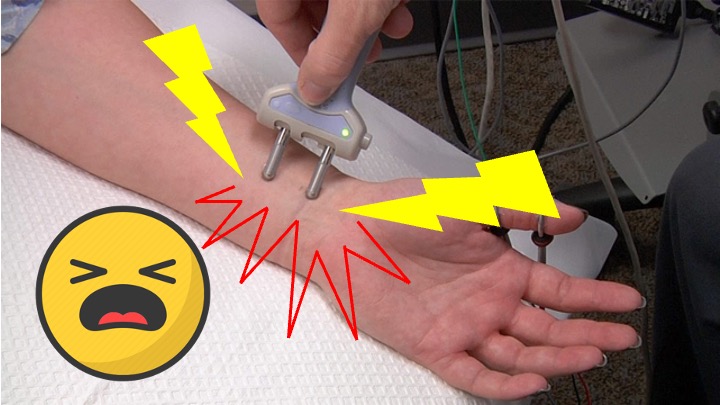
If you have carpal tunnel syndrome, many doctors order a test called a “nerve study.”  These are also called “EMGs” or “electrodiagnostic studies.”  Do not worry about the name, just know that it is a test performed by a doctor or other trained medical provider. It looks closely at the different nerves in your arm to see if there are any problems with the “signals” being sent along the nerve.  These include the signals being sent from your brain to your hand, and also the signals going in

EMG pic

the other direction, from your hand to your brain. Think of the nerve like an electrical cord sending signals back and forth.

Nerve studies usually take about 30 minutes to perform, and sadly can be very uncomfortable. It requires multiple needles
inserted through your skin and deep into your muscles with many electrical shocks along the length of your arm.


If they are painful, why do doctors still order nerve studies?

There are still some hand doctors and hand surgeons that require nerve studies to prove that you have carpal tunnel syndrome. Because of this, many doctors still order these studies.  In some situations, nerve studies can be very helpful. For example, sometimes it is hard even for an experienced doctor to tell exactly what your problem is. In the past, nerve studies were the only way to test for carpal tunnel syndrome.

However, most recent evidence shows that for carpal tunnel syndrome, nerve studies are not important or necessary to get.

For example, Raleigh North Carolina Carpal Tunnel Specialist Johnny T. Nelson uses a special scoring system called the CTS-6, which is equal to or better than nerve studies at detecting carpal tunnel syndrome.  The CTS-6 includes a few simple questions about your symptoms and a few physical exam findings. If you have carpal tunnel, the CTS-6 is part of your visit with Dr. Nelson, and takes only 1-2 minutes to complete.


Dr. Nelson also performs in-office ultrasound. 

There is new evidence that simply measuring the swelling of the carpal tunnel nerve at the wrist is EVEN BETTER than nerve studies at showing carpal tunnel syndrome.  In office ultrasound

  • Only takes Dr. Nelson about 30 seconds to perform
  • Is COMPLETELY painless
  • Is a FRACTION of the cost of nerve studies!

You have carpal tunnel syndrome?  Do you wake up at night and shake your hands out?  Do you drop things during the day because you cannot feel your fingers well?  If so, you probably do not need expensive and painful nerve studies.  You DO need a visit with Dr. Johnny T. Nelson, MD, Raleigh North Carolina Carpal Tunnel Expert!  Call 919-872-5296 to make your visit today!

Do I Need Nerve Studies If I Have Carpal Tunnel Syndrome? Read More »

Image

Announcing: January 10th Carpal Tunnel Open House

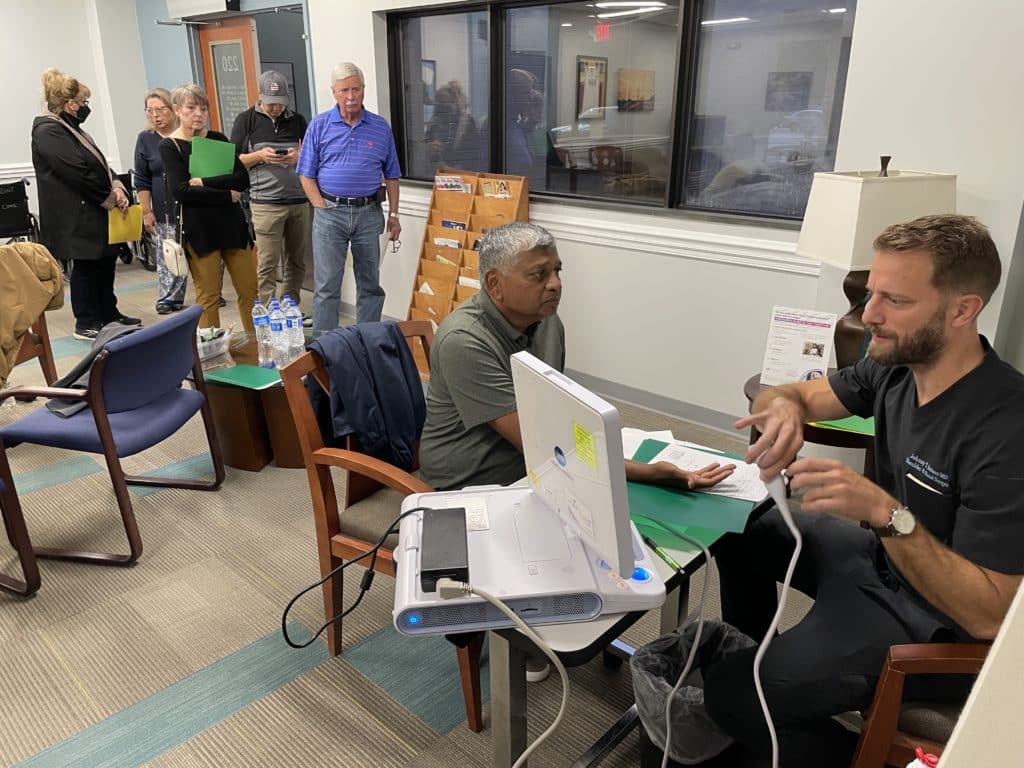
image2Join Dr. Nelson for a free, no obligation scanning open house on January 10th from 6-8PM at the Bone & Joint Surgery Clinic!

While many struggle with hand and wrist problems, it is very difficult to get personalized, trustworthy advice. What is my diagnosis? What should I do? Who can I trust?

NOW IS YOUR CHANCE!

Dr. Nelson will give a short talk about the two most common conditions of the hand and wrist: carpal tunnel syndrome and trigger finger. This will be followed by individual “mini consultations.” You will have an informal chat with Dr Nelson and he will tell you your most likely diagnosis. If desired, Dr. Nelson will also have an ultrasound machine to scan your wrist and measure your carpal tunnel nerve to confirm the diagnosis for you.

Visit www.drnelsonctr.com for more information or to RSVP. You may also call his office directly and RSVP at 919-872-5296.

Announcing: January 10th Carpal Tunnel Open House Read More »

Book An Appointment

* All indicated fields must be completed.
Please include non-medical questions and correspondence only.

Location Map: 3801 Wake Forest Road Raleigh, NC 27609
rue logo wt

OFFICE HOURS

Monday - Friday: 8:30 am - 4:30 pm

CONTACT US

Accessibility Toolbar

Scroll to Top