October 2025

shoulderpainquestion

I Have Shoulder Pain: Who Should I See?

I Have Shoulder Pain: Who Should I See?

Studies estimate that about 15% of people experience shoulder pain at any given time.  Are you one of those people?

If you are, you may be confused about where to go.  You might feel tempted to start research online, or watch online videos to try and figure out why you are hurting.  You may consider seeing your primary care doctor or a trusted physical therapist or chiropractor.

Many of these options are acceptable starting points.  However, if you want to improve your chances of receiving a very clear answer about why your shoulder is hurting, it is best to start with an orthopedic shoulder specialist.

An orthopedic shoulder specialist also improves your chances of getting back to life without shoulder pain!

First, it is essential to understand the role of a shoulder specialist.  It is true that a shoulder specialist, such as Dr. Johnny T. Nelson, MD, is a highly trained in skilled shoulder surgeon.  However, seeing a shoulder surgeon does not always mean you will receive an operation!

Fellowship-trained shoulder specialists spend more time and effort studying the shoulder, including anatomy, diseases, and surgical and nonsurgical treatments than anyone else.  No other field of medical providers has such in-depth knowledge of the shoulder or its problems.  Because of this, an orthopedic shoulder specialist like Dr. Nelson is much more likely to make the correct diagnosis right away.  Not only does he have the most training and expertise, but also has more tools at his disposal, including physical examination, ultrasound scanning, and the ability to order and interpret tests such as x-rays and MRI scans.

Once your shoulder specialist makes the correct diagnosis, then he will discuss with you different treatment options.  These treatment options include everything from continued watchful waiting or “observation,” physical therapy, oral medications and anti-inflammatories, chiropractic care, home exercises, injections such as steroids or platelet rich plasma, or surgery.  Often, orthopedic shoulder specialists will send you to a top performing physical therapist or chiropractor because they know you and the shoulder problem that you are having will respond well.

In conclusion, to get the “biggest bang for your buck,” start with an orthopedic shoulder specialist such as Dr. Johnny T. Nelson, MD.  Dr. Nelson is North Carolina’s shoulder expert and includes ultrasound in the diagnosis of most shoulder problems.  If you have shoulder pain, call 919-872-5296 today to schedule your visit!

I Have Shoulder Pain: Who Should I See? Read More »

sleepcarpaltunnel

Why Are Carpal Tunnel Symptoms Worse At Night?

Why Are Carpal Tunnel Symptoms Worse At Night?

If you have carpal tunnel syndrome, it is very likely that you are feeling discomfort.  This discomfort is different in different patients.  Raleigh, North Carolina, carpal tunnel expert Dr. Johnny T. Nelson, MD understands that carpal tunnel syndrome and similar nerve problems come in different “flavors.”

The most common symptom that patients feel is pain, numbness, tingling in the hands at night.  Carpal tunnel syndrome and similar nerve problems are special in this way. They almost always bother you more at night.

But why does carpal tunnel syndrome and carpal tunnel symptoms seem to be worse at night?

The answer is complex, but there are several explanations.

First of all, during the day our brains are very active.  Multiple signals are coming and going from the brain to the limbs, and from the limbs to the brain.  There are external noises, people moving around this, work we need to do, and other feelings coming from all sides.  However, at night, a lot of this “noise” quiets down.  As a result, nerve problem such as carpal tunnel syndrome are no longer “drowned out” by the noise.  As a result, the carpal tunnel “noise” seems louder and more painful.  This is why patients with carpal tunnel syndrome report waking up at night, hanging their hands off the edge of the bed, and flicking or shaking their hands and fingers.

The second explanation has to do with being still while we sleep.  During the day, we are using our hands, moving our arms to do things like to eat, drink, work, drive a car, and play with her children.  This motion helps to keep fluid and blood from building up in her hands and feet.  The movement of the muscles and joints actually helps to “pump” swelling back to the heart.  But at night, when we are still, fluid and swelling tends to build up in our hands and feet.  As a result, this small amount of swelling can “crowd out” the carpal tunnel nerve and make carpal tunnel symptoms worse.

Finally, when we sleep we tend to “curl up like a baby.”  We like to clinch our fists, bend our wrists and elbows close to our body.  These positions, although they are comfortable, actually increase pressure on the carpal tunnel nerve.  In fact, when Dr. Johnny T. Nelson, MD is testing you for carpal tunnel syndrome, one of the movements he tests is to bend the wrist and hold it in this position.  If this creates carpal tunnel symptoms or makes them worse, you have carpal tunnel syndrome.

If you have carpal tunnel syndrome and are having a hard time sleeping, call 919-872-5296 today to schedule a visit with North Carolina Carpal Tunnel Expert Dr. Johnny T. Nelson, MD.

Why Are Carpal Tunnel Symptoms Worse At Night? Read More »

cthowisthatpossible

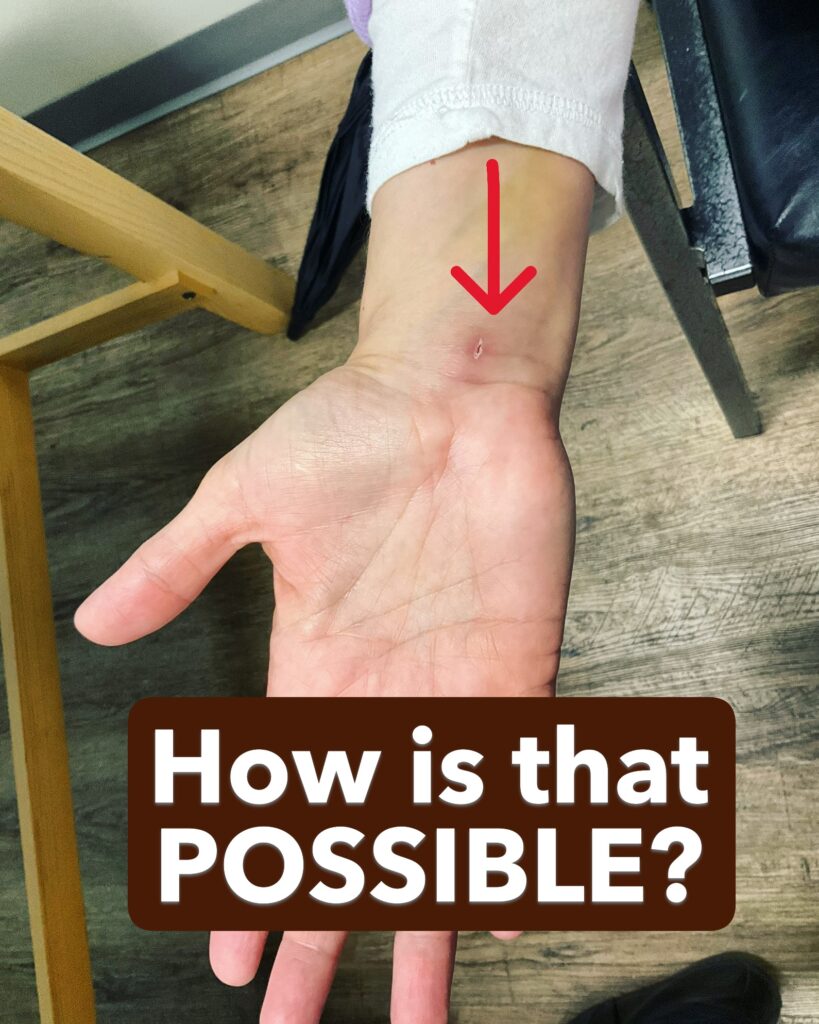
Carpal Tunnel Release Through A Tiny Skin Poke: How Is That Possible?

Carpal Tunnel Release Through A Tiny Skin Poke: How Is That Possible?

If you have carpal tunnel syndrome or are thinking about a carpal tunnel release procedure, you may have questions about your incision!

Carpal tunnel release is a time-tested surgery that cures carpal tunnel syndrome for good.  It has very high success rates.  There are also many different ways to perform a carpal tunnel release.  If you are scheduled to have a carpal tunnel release surgery, you should ask your surgeon what type of release will be performed and what your incision will look like.

Raleigh, North Carolina, Carpal Tunnel Specialist Dr. Johnny T. Nelson, MD specializes in advanced ultrasound-guided surgery.  As a result, this special skill allows Dr. Nelson to perform a carpal tunnel release through a 5 mm “poke” in the skin of the wrist.

How is this possible?

All carpal tunnel release procedures do the same thing.  The goal of a carpal tunnel release is to open a special band inside the wrist that allows the carpal tunnel to grow slightly wider.  When the tunnel grows slightly wider, the carpal tunnel nerve has more room to “breathe.”  So whether your surgeon performs an open carpal tunnel release or an ultrasound-guided carpal tunnel release, the goal is the same.

But what is different is how they get there!

Open carpal tunnel release arrives at the special ligament by going through the skin of the palm.  To do this, an incision is necessary in the thick skin of the palm, which has more nerve endings.  Other structures have to be cut through as well, including a special tissue called “fascia” deep to the skin.  Dr. Johnny T. Nelson, MD describes the skin and the fascia as “innocent bystanders.”  They do not cause carpal tunnel symptoms but need to be cut through for a open carpal tunnel release.

On the other hand, carpal tunnel release with ultrasound guidance allows the most targeted treatment possible.  Through a tiny 5 mm poke incision, Dr. Nelson is able to release the special ligament only.  There is no incision on the palm skin, and there is no “innocent bystander” tissue!  Think of this as performing carpal tunnel release from the “inside out.”  This is not possible without a special camera or an ultrasound machine.

So how is it possible?  It is possible because of ultrasound!

If you have carpal tunnel syndrome, numbness, tingling at night or during the day, call 919-872-5296 today to schedule your visit with Dr. Johnny T. Nelson, MD.


Carpal Tunnel Release Through A Tiny Skin Poke: How Is That Possible? Read More »

Book An Appointment

* All indicated fields must be completed.
Please include non-medical questions and correspondence only.

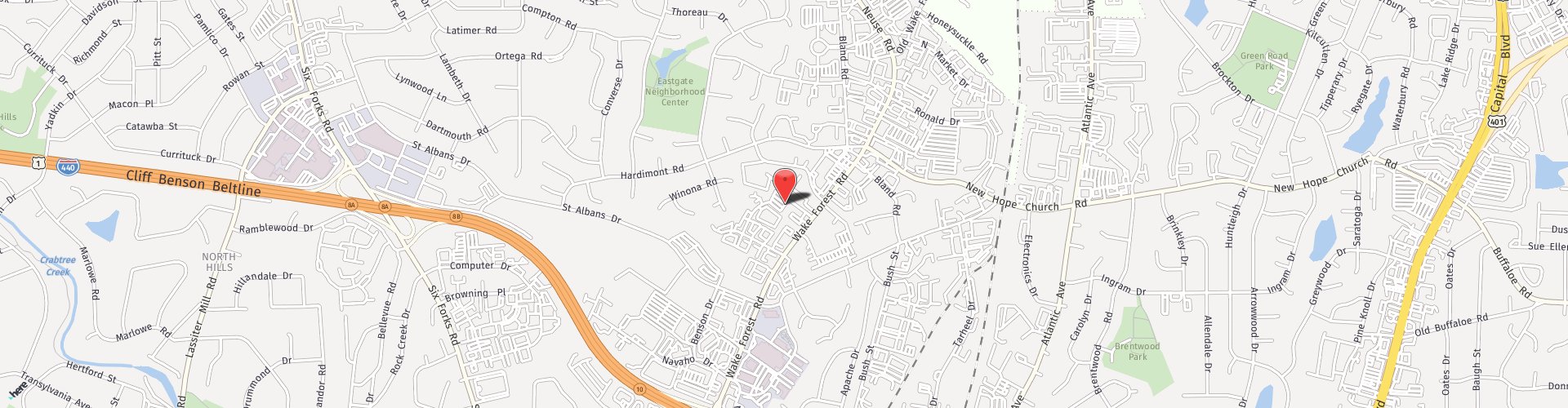
Location Map: 3801 Wake Forest Road Raleigh, NC 27609
rue logo wt

OFFICE HOURS

Monday - Friday: 8:30 am - 4:30 pm

CONTACT US

Accessibility Toolbar

Scroll to Top