August 2025

Why Is It Important for a Shoulder Specialist to Use Ultrasound?

Why Is It Important for a Shoulder Specialist to Use Ultrasound?

If you are reading this, it is likely that you or someone you know has shoulder pain. It is possible that you tried treatments to improve your shoulder pain without success and are considering a visit with an orthopedic shoulder specialist.

This is certainly a good place to start.

An orthopedic shoulder specialist is expert in the evaluation, diagnosis, and treatment of all shoulder problems including rotator cuff tears, bursitis, instability, and biceps problems. An orthopedic specialist can order and read x-rays, CT scans, MRI studies and has more in-depth knowledge of the shoulder and shoulder problems than any other healthcare provider, including primary care physicians, physical therapists, chiropractors, and nonsurgical sports medicine doctors. Not only can an orthopedic shoulder specialist evaluate your shoulder, but they also provide treatment. It is also important to know that a visit with an orthopedic shoulder specialist does not always mean you will have surgery.

But there are many options out there! It is important that you see a shoulder specialist that uses ultrasound as part of evaluation and treatment of shoulder pain.

If you live in North Carolina, you are in luck! Dr. Johnny T. Nelson, MD is one of those shoulder specialists!

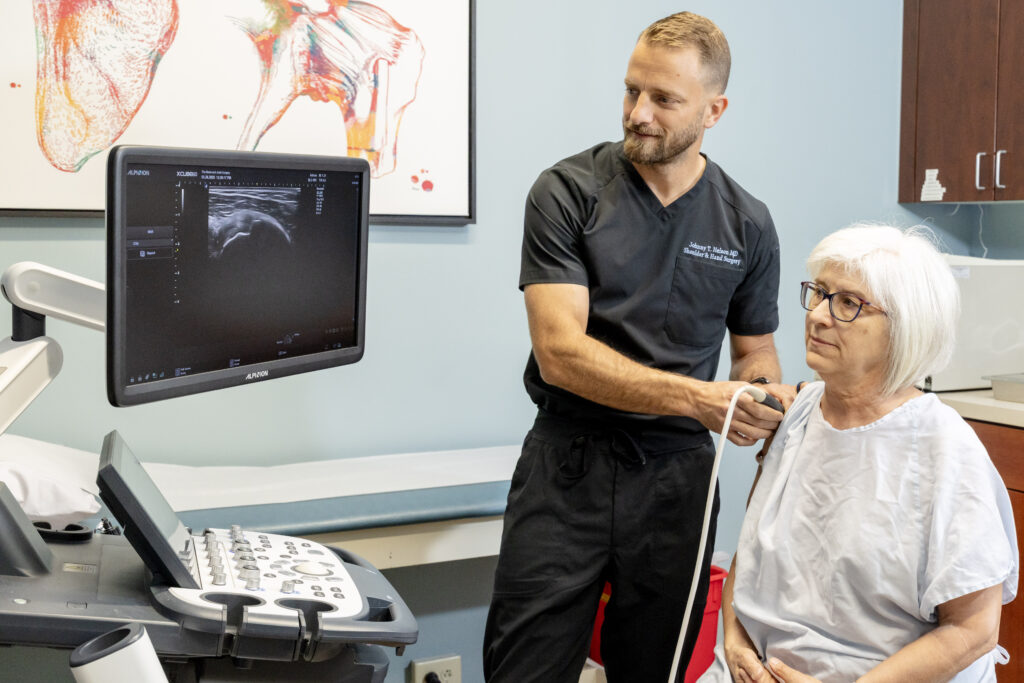
At The Bone and Joint Surgery Clinic, Dr. Johnny Nelson has state-of-the-art ultrasound equipment that allows a high-resolution scan of the rotator cuff and other structures in the shoulder. Along with a physical exam, x-rays, and a short discussion, Dr. Nelson can give you important information about the cause of your shoulder pain.

Doctors that do not use ultrasound are not able to see or evaluate the rotator cuff at the time of evaluation. This often requires an MRI study, which insurance companies will often deny, are expensive, require complicated scheduling, and multiple other visits to obtain. As a result, patients with big rotator cuff tears may possibly be treated with physical therapy, injections, or observation when they should be undergoing rotator cuff repair.

Dr. Johnny T. Nelson is also able to use ultrasound to perform targeted injections that are not possible without ultrasound. These include biceps injections and suprascapular nerve injections, which can be very helpful and more effective than “traditional” blind injections performed without ultrasound.

Do you have shoulder pain? Are you worried that you have a rotator cuff tear? Call 919-872-5296 today to schedule a visit with Dr. Johnny T. Nelson, MD, Raleigh North Carolina shoulder specialist.

Why Is It Important for a Shoulder Specialist to Use Ultrasound? Read More »

image

Do I Need to Wear a Splint after I Have My Carpal Tunnel Release?

Do I Need to Wear a Splint after I Have My Carpal Tunnel Release?

You may have family or friends that had a carpal tunnel release procedure. Most likely they were placed into a splint for the early days of the healing process after the surgery.

This is actually quite common, since most carpal tunnel releases performed in the United States are done through an “open” incision in the palm. Because of the larger incision and the location of the incision, open carpal tunnel release is more painful, requires suture, and requires longer healing time. To avoid problems with the incision, a splint is placed for 10 days or 2 weeks after the procedure.

But ultrasound technology has changed all of this!

Raleigh, North Carolina carpal tunnel specialist Dr. Johnny T. Nelson, MD treats carpal tunnel syndrome with ultra minimally invasive release under ultrasound guidance. This requires only a very small (5 mm, about the size of a pea) poke incision on the wrist, not the palm. This poke incision does not require suture and heals much quicker than an incision in the palm. Because of this, Dr. Nelson does not need to place carpal tunnel patients into a splint after their procedure.

That is right, after ultrasound-guided carpal tunnel release, no splint is necessary!

While Dr. Nelson will place a small, light soft dressing on the hand and wrist, this is removed 1 or 2 days after the procedure. Because it is soft and light, you are able to perform important activities right away: Eating, drinking, dressing, bathroom, hygiene, etc. After the dressing is removed, you may wash your hands and take a shower and get clean water on the site of the surgery.

If you are concerned about how long it will take you to heal after carpal tunnel release surgery, call 919-872-5296 today to schedule a visit with Dr. Johnny T. Nelson, MD, North Carolina carpal tunnel expert!

Do I Need to Wear a Splint after I Have My Carpal Tunnel Release? Read More »

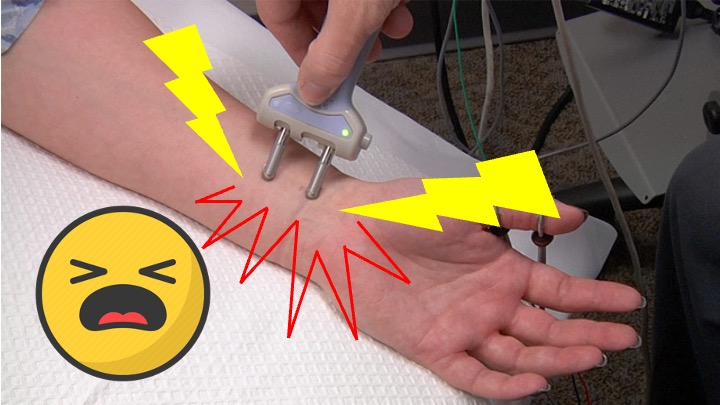
EMG pic

I Think I Have Carpal Tunnel Syndrome. Do I Need Nerve Studies?

I Think I Have Carpal Tunnel Syndrome. Do I Need Nerve Studies?

If you have been told that you need to have nerve studies, also called “electrodiagnostic studies,” it is possible that you have been diagnosed with a nerve condition like carpal tunnel syndrome.

Nerve studies work by using electric signals and shocks to study how well nerves are working. They can be helpful in certain situations to tell if a nerve is not working correctly. While they can be useful, they can also be painful, expensive, and time-consuming.

And they also may be completely unnecessary!

Carpal tunnel specialists like Dr. Johnny T. Nelson, MD understand that nerve studies are not always necessary. For most patients, a few simple questions and a few simple examination signs will tell Dr. Nelson whether or not you have carpal tunnel. A very quick and painless 30 second ultrasound scan will further confirm the diagnosis.

Did you know that 1 out of every 5 patients with carpal tunnel syndrome have normal nerve studies?

It is a good idea to start with a carpal tunnel specialist, such as Dr. Johnny T. Nelson, MD, before you have your nerve studies completed. If nerve studies are truly necessary, he will order the nerve studies and review the results with you. If they are not necessary, Dr. Nelson diagnosed you properly and very likely perform a quick and painless ultrasound scan to confirm your diagnosis.

If you have carpal tunnel or are considering having a release procedure, make sure you call 919–872–5296 today to schedule a visit with Dr. Johnny T. Nelson, MD, North Carolina carpal tunnel expert!

I Think I Have Carpal Tunnel Syndrome. Do I Need Nerve Studies? Read More »

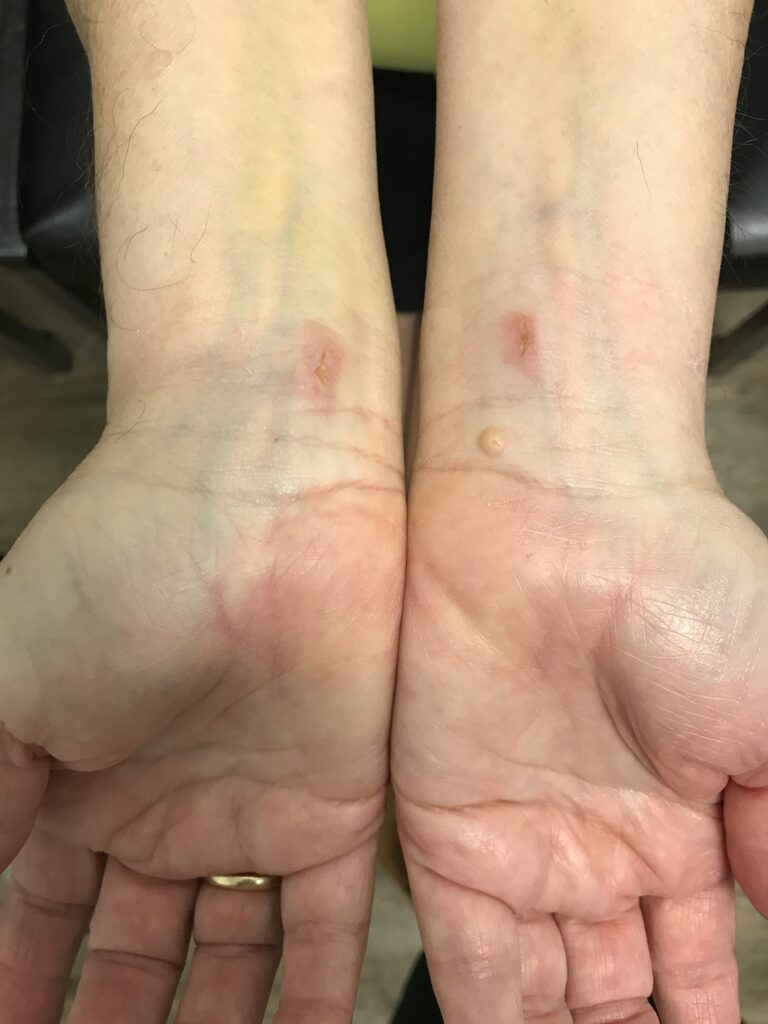
sonexhealed

Is It Normal to Have Redness around My Incision after Ultrasound-Guided Carpal Tunnel Release?

The short answer is: Yes!

Before we explain, it is important to understand that if you have questions about your surgery, your incision, or any concerns about redness, swelling, pain, etc., it is very important to consult the surgeon who performed your procedure. While redness can be a normal response of the human body to a procedure, including carpal tunnel release for carpal tunnel syndrome, it could also represent the signs or symptoms of an infection.

sonexhealedWhen a surgeon, such as Dr. Johnny T. Nelson, MD, performs a carpal tunnel release procedure, it is necessary to make a small opening in the skin. This opening, called and “incision,” allows the hand specialist to introduce a special device into the carpal tunnel. This allows the carpal tunnel to be released from the “inside out.”

It is important to understand that when a cut or injury happens by accident, the human body responds right away. This response ensures that bacteria and bugs from the outside world do not find their way inside the body and cause an infection. The signs of this response include warmth, redness, and swelling.

But the human body cannot tell the difference between an accidental cut and a surgical incision.

Because the human body sees the surgical incision the same as an accidental cut, it is normal to see some of the same signs. These include warmth, redness, and swelling. This is often called the “inflammatory” steps of healing. Your hand specialist, Dr. Johnny T. Nelson, MD, will counsel you on what to expect after your ultrasound-guided carpal tunnel release procedure.

And most importantly, if you undergo a carpal tunnel release procedure, Dr. Nelson will follow you closely to make sure that you are healing well.

If you have carpal tunnel or are considering having a release procedure, make sure you call 919–872–5296 today to schedule a visit with Dr. Johnny T. Nelson, MD, North Carolina carpal tunnel expert!

Is It Normal to Have Redness around My Incision after Ultrasound-Guided Carpal Tunnel Release? Read More »

Book An Appointment

* All indicated fields must be completed.
Please include non-medical questions and correspondence only.

Location Map: 3801 Wake Forest Road Raleigh, NC 27609
rue logo wt

OFFICE HOURS

Monday - Friday: 8:30 am - 4:30 pm

CONTACT US

Accessibility Toolbar

Scroll to Top