Sonex

Carpal Tunnel Surgery Risks

What Are the Risks of Carpal Tunnel Release?

What Are the Risks of Carpal Tunnel Release?

If you have carpal tunnel syndrome or any other medical problem, you may be thinking about a surgical procedure. With modern technology, surgical procedures to treat serious medical problems are improving every year. Scientific studies, new techniques and devices, better understanding of medical problems all help to improve the surgical care provided.

But you may still feel nervous about having surgery!

This is very normal. Most patients who have a surgical procedure report feeling nervous at some stage of the planning process. This is why it is very important to see a well-trained specialist about the problem that you are having.

If your problem is carpal tunnel syndrome, North Carolina Carpal Tunnel Specialist Dr. Johnny T. Nelson, MD is the well-trained specialist for you!

Dr. Nelson takes pride in spending time with every patient, making the best decision for them based on their plans, needs, and special situations. He also takes pride in listening closely to questions and concerns, especially when surgery is being considered. When a carpal tunnel release is considered, Dr. Nelson discusses the risk of surgery with every patient.

It is helpful to think about surgery likely think about driving a car. Every time we get into a car or leave our house, we are taking a risk. It is always possible that something bad can happen. The risk is very, very small, but the risk does exist!

Carpal tunnel release with ultrasound guidance helps to make sure that the risk is as small as possible!

Because there is no anesthesia, the risk of anesthesia is much lower. Anytime there is an incision, there is a risk for infection. But the smaller the incision, the smaller the risk for infection. The 5 mm poke incision used for ultrasound-guided carpal tunnel release is extremely small. When surgery is performed, there is always a risk of damage to other structures, such as tendons, nerves, or blood vessels. Because carpal tunnel release performed by Dr. Nelson is done under ultrasound guidance, he can see all of the structures all at once, and keep them all safe.

If you have carpal tunnel syndrome and are ready to get rid of your symptoms for good, call 919-872-5296 today to schedule a visit with Dr. Johnny T. Nelson, MD, Raleigh, North Carolina, shoulder and carpal tunnel specialist!

What Are the Risks of Carpal Tunnel Release? Read More »
3B253DF0 1F65 4398 92BC 0BB24D8D311C

Can I Have Carpal Tunnel Release On Both Sides At Once?

Can I Have Carpal Tunnel Release On Both Sides At Once?

Unfortunately, carpal tunnel syndrome is very common. One out of every 20 adult Americans has this condition, which can interfere with sleep, work, and free-time activities. Worse still, many have severe problems in both hands.

Sometimes simple treatments for carpal tunnel can help to quiet down the symptoms, especially if the symptoms came on recently. These include oral anti-inflammatories such as steroids or NSAIDs, wearing a wrist splint at night, avoiding activities that make the symptoms worse, and even injections performed by a hand surgeon such as Dr. Nelson.

But what do I do when carpal tunnel on both sides does not get better?

Carpal tunnel release is the time-tested treatment for carpal tunnel syndrome. It reliably and quickly relieves the numbness, tingling, and especially night pain and gripping pain due to carpal tunnel syndrome. And in most patients, it does this permanently!

However, patients with carpal tunnel on both sides, also known as “bilateral carpal tunnel syndrome,” worry about having surgery on both hands at the same time. Some are concerned that they will not be able to take care of themselves. For example, they are worried that dressing, going to the bathroom, picking up a small child will become too difficult. Simply put, they feel they need to have one “good hand” to help out while the operated hand heals.

But with new technology and a technique offered by North Carolina Carpal Tunnel Specialist Dr. Johnny T. Nelson, MD, this is no longer the case.

For many years, carpal tunnel release was done with an open incision in the palm. While this treats and cures the symptoms of carpal tunnel syndrome, the incision in the palm can be painful, especially in the early days after surgery. This can require a prolonged healing time, where heavy or even simple, light activities around the house can be difficult.

However, Dr. Johnny T. Nelson is an expert in the treatment of carpal tunnel syndrome under ultrasound guidance!

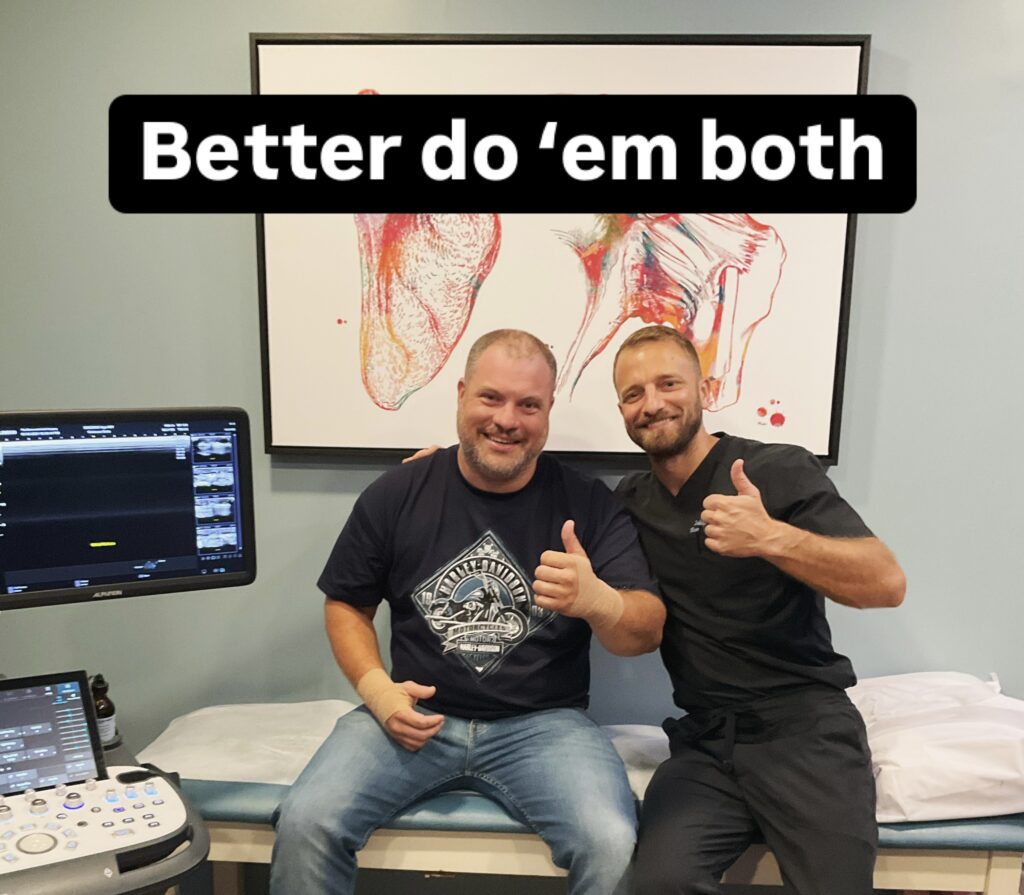
Due to the extremely small “poke” incision on the wrist, without an incision on the palm, the same release and relief of symptoms can be done “inside-out” while shortening the period of healing pain after the surgery. With ultrasound-guided carpal tunnel release, most patients with carpal tunnel on both sides have it treated on the same day. With ultrasound-guided carpal tunnel release, you may return to all activities immediately, including cooking, hygiene, dressing, and even work, including heavy or repetitive labor.

Since 2022, 50% of patients treated by Dr. Johnny T. Nelson, MD have both carpal tunnels released at the same time!

If you have carpal tunnel on both sides and you are ready to be free of your symptoms, ultrasound-guided carpal tunnel release on the same day for both hands is often the best option for you. But remember, every patient is different! Your treatment plan depends on a one-on-one consultation with Dr. Johnny T. Nelson MD, North Carolina Carpal Tunnel Specialist. Call 919-872-5296 for an appointment.

Can I Have Carpal Tunnel Release On Both Sides At Once? Read More »

willitcomeback

Will My Carpal Tunnel Syndrome Come Back After I Have A Carpal Tunnel Release?

Will My Carpal Tunnel Syndrome Come Back After I Have A Carpal Tunnel Release?

This is a question that North Carolina carpal tunnel expert Dr. Johnny T. Nelson, MD hears a lot.

Understandably, patients want to know if a treatment for carpal tunnel syndrome will be permanent or only temporary. Carpal tunnel syndrome can cause severe problems with work, sleep, and home life, so patients do not want it to return.

For 99% of patients, the answer is NO, your carpal tunnel syndrome will not come back!

This is very good news. Carpal tunnel release, especially carpal tunnel release with ultrasound guidance, has a very high rate of permanent cure and patient satisfaction. This satisfaction lasts a long time, usually lifelong, according to studies.

However, it is important to understand that there are rare situations where carpal tunnel syndrome or similar nerve problems can return. For example, those with diabetes, thyroid problems, or a history of extensive surgery or scarring may be at risk of repeat nerve problems in the future.

If you schedule a visit with Dr. Johnny T. Nelson, MD, he will likely ask you about medical problems that may place you at risk for nerve problems in the future. He will also perform an exam of your hand and wrist to see if you have other problems that may cause the carpal tunnel syndrome to come back.

Dr. Nelson will also tell you if your carpal tunnel syndrome and nerve problems are very bad. If the nerve problems are very bad, sometimes the problems can be permanent, even if treated by a highly trained specialist.

If you have carpal tunnel syndrome and are growing tired of the numbness, tingling, and waking up at night, call 919-872-5296 today to schedule a visit with Dr. Johnny T. Nelson, MD.

Will My Carpal Tunnel Syndrome Come Back After I Have A Carpal Tunnel Release? Read More »

sonexhealed

Is It Normal to Have Redness around My Incision after Ultrasound-Guided Carpal Tunnel Release?

The short answer is: Yes!

Before we explain, it is important to understand that if you have questions about your surgery, your incision, or any concerns about redness, swelling, pain, etc., it is very important to consult the surgeon who performed your procedure. While redness can be a normal response of the human body to a procedure, including carpal tunnel release for carpal tunnel syndrome, it could also represent the signs or symptoms of an infection.

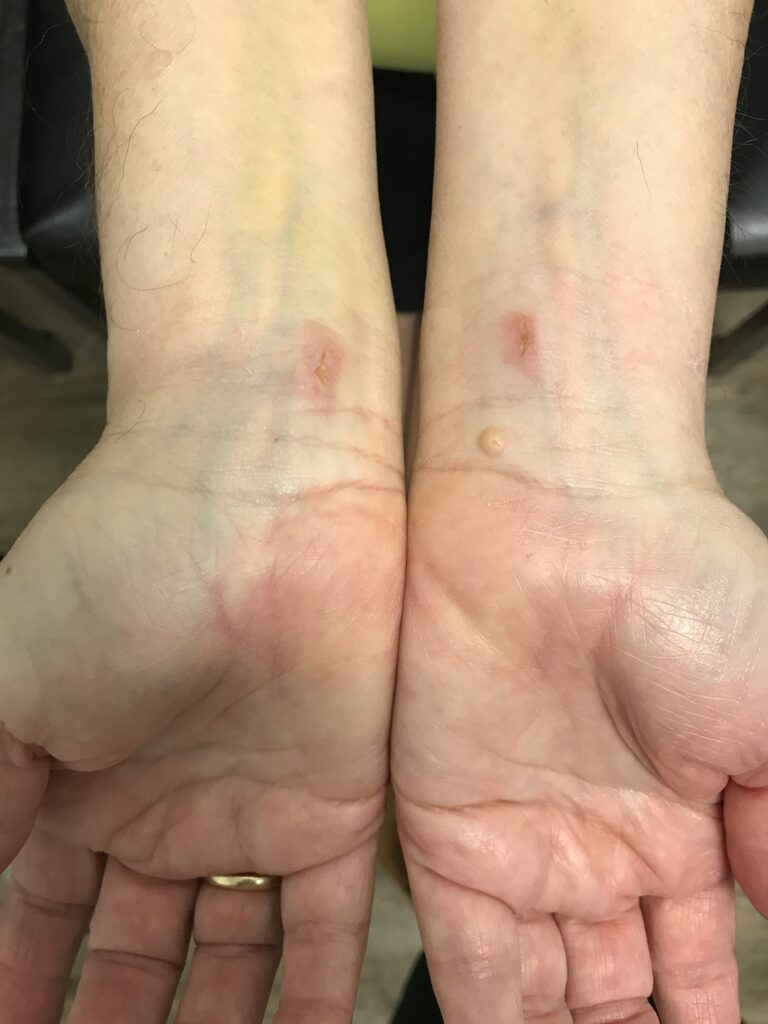
sonexhealedWhen a surgeon, such as Dr. Johnny T. Nelson, MD, performs a carpal tunnel release procedure, it is necessary to make a small opening in the skin. This opening, called and “incision,” allows the hand specialist to introduce a special device into the carpal tunnel. This allows the carpal tunnel to be released from the “inside out.”

It is important to understand that when a cut or injury happens by accident, the human body responds right away. This response ensures that bacteria and bugs from the outside world do not find their way inside the body and cause an infection. The signs of this response include warmth, redness, and swelling.

But the human body cannot tell the difference between an accidental cut and a surgical incision.

Because the human body sees the surgical incision the same as an accidental cut, it is normal to see some of the same signs. These include warmth, redness, and swelling. This is often called the “inflammatory” steps of healing. Your hand specialist, Dr. Johnny T. Nelson, MD, will counsel you on what to expect after your ultrasound-guided carpal tunnel release procedure.

And most importantly, if you undergo a carpal tunnel release procedure, Dr. Nelson will follow you closely to make sure that you are healing well.

If you have carpal tunnel or are considering having a release procedure, make sure you call 919–872–5296 today to schedule a visit with Dr. Johnny T. Nelson, MD, North Carolina carpal tunnel expert!

Is It Normal to Have Redness around My Incision after Ultrasound-Guided Carpal Tunnel Release? Read More »

Wide Awake Carpal Tunnel Release

The Benefits of Wide Awake Procedures

Wide Awake Carpal Tunnel ReleaseWhat is it like to be awake during a procedure?

You may have carpal tunnel syndrome or trigger finger.  If so, you may be considering surgical treatment to cure the symptoms forever. Dr. Johnny Nelson is an expert in carpal tunnel release and trigger finger release with real-time ultrasound guidance.  He also performs many other procedures around the hand and wrist.

It may sound crazy to some, but one option is to remain completely awake during your procedure.


If you are considering surgery, your surgeon should discuss different options for anesthesia. Wide-awake surgery is not possible or encouraged with some procedures.  For example, major hip or knee surgery, spine surgery, or shoulder surgery requires at least sedation or “sleeping medicine.”  Dr. Johnny T. Nelson is a Raleigh North Carolina shoulder specialist, and all patients who have shoulder surgery or rotator cuff repair have at least sedation during their procedure.

But wide-awake surgery is very common and for most small hand procedures is a very good option.

Dr. Nelson has performed over 700 carpal tunnel releases with real-time ultrasound guidance, and no patient has ever needed sedation or general anesthesia.


Being wide-awake during surgery does not mean that you will feel pain!  Dr. Nelson uses numbing medicine, usually applied gently around the surgical site just before the procedure begins.  The difference is that you will not need an IV, any sleeping medicine, and no tube will be placed down your throat to keep you asleep during the procedure.

The closest analogy is going to the dentist.  Most patients go to the dentist and have dental work done without being asleep.  If deeper work is necessary, there are situations where dentists give sleeping medicine.  But usually the most that they need to do is inject some numbing medicine.

Thanks to new technology, carpal tunnel release can now be performed with real-time ultrasound guidance. This wide-awake procedure is more comfortable overall. There are no burning medicines given through an IV that leave you groggy and nauseated.

Also, with wide awake surgery there are little or no anesthesia risks. Many patients have medical conditions, such as heart or lung problems, that make traditional anesthesia higher risk or more difficult. As a result, no medical clearance is necessary from your medical doctor, and you do not need to stop blood thinners!

Finally, because of all these benefits, wide-awake surgery is perfect for the office setting. The anxiety caused by being in a hospital or operating room is a thing of the past!

If you have carpal tunnel syndrome, call 919-872-5296 or contact us to schedule your visit with Dr. Johnny T. Nelson MD, North Carolina’s premier carpal tunnel specialist.

The Benefits of Wide Awake Procedures Read More »

Patient Opportunity: Mission Clinical Registry

Mission Clinical Registry for Carpal Tunnel SyndromePatients in North Carolina experiencing the painful symptoms of carpal tunnel syndrome will soon be eligible to participate in the Mission Clinical Registry!
Dr. Johnny T. Nelson MD will soon be enrolling patients in the study. It will be the largest multi-center clinical study in the United States investigating the treatment of patients suffering from carpal tunnel syndrome.

For more information about the Mission Clinical Registry for Carpal Tunnel Syndrome, read a full press release here. Patients interested in information about the study may visit www.ctrstudy.com for more information.

This landmark study will collect real-world, long-term data on patients suffering from carpal tunnel syndrome who have a carpal tunnel release using the UltraGuideCTR™ using real-time ultrasound guidance (CTR-US). Patient enrolled in the study will be paid up to $600 for answering questions about their healing experience.

Do you or someone you know or love suffer from carpal tunnel syndrome? Are you ready to put carpal tunnel syndrome behind you for good? Call 919-872-5296 or contact us to schedule a visit with Dr. Johnny T. Nelson MD, North Carolina’s Carpal Tunnel Specialist!


Patient Opportunity: Mission Clinical Registry Read More »

example postop

Does Redness Around My Carpal Tunnel Incision Mean Infection?

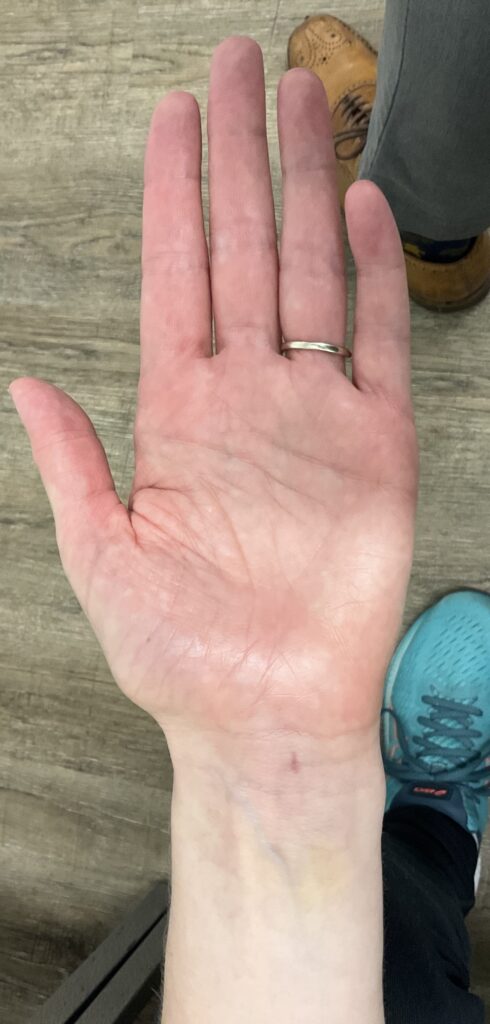
Photo of patient's hand two weeks after carpal tunnel release with real-time ultrasound guidanceDoes redness around my carpal tunnel incision mean infection?

The short answer to this question is: usually not.

Before we explain this, it must be clarified. If you are experiencing redness around an incision, you must notify your physician. This blog post is not specific medical advice about your wrist, but about the healing process in general.

Redness around an incision can mean different things. This includes the small 5 mm “poke” incision performed for carpal tunnel release with real–time ultrasound guidance. Raleigh Hand Specialist Johnny T. Nelson MD performs this procedure. 

There are times where redness does mean infection.  Raleigh North Carolina carpal tunnel specialist Dr. Johnny T. Nelson, MD discusses the risk of infection with every patient.  This risk is extremely low.  The risk of infection is higher in patients with certain medical conditions, especially diabetes.  Other signs that suggest infection include fevers, chills, the overall feeling of aches or “feeling sick,” increasing pain and swelling of the entire hand, wrist, and forearm.

However, there are other times where redness is a very natural and normal part of the healing process.


After a procedure such as carpal tunnel release, the human body’s immune system does not “understand” what has happened. It only sees that there is a cut in the skin that places the body at risk for invasion by bacteria and infection.  So it does what it is designed to do, which is to send immune cells to the area to prevent infection from setting in.

This process is not called infection but rather “reaction.”  So Dr. Nelson may mention that your poke incision appears “reactive.”

This reactive redness is sometimes accompanied by a small amount of fluid.  This fluid is not “pus” but is usually a clearish fluid.  This is the part of the blood that contains many of the immune cells sent to the area to keep infectious organisms away.

If you have concerns about your incision, contact Dr. Nelson or the doctor who performed your surgery.


If you have carpal tunnel syndrome, if you have numbness and tingling in your hands that wakes you up at night, please visit www.raleighupperex.com or call 919-872-5296 to schedule a visit with Dr. Johnny T. Nelson, MD, Raleigh North Carolina carpal tunnel specialist.

Visit Dr. Nelson’s YouTube Channel or follow him on Instagram.

Does Redness Around My Carpal Tunnel Incision Mean Infection? Read More »

1024px AMA logo (2).svg

What Doctors Wish Patients Knew About Carpal Tunnel Syndrome

1024px AMA logo (2).svgIn October 2023, the American Medical Association published a very interesting article entitled, “What Doctors Wish Patients Knew About Carpal Tunnel Syndrome.”


Find the full article HERE.

This article gives useful points of information about carpal tunnel syndrome. As an orthopaedic shoulder and hand specialist, Dr. Johnny T. Nelson MD is very dedicated to patient education and awareness.

The key points of the article include:
1.  Numbness is a more important symptom than pain
2.  It is worse at night
3.  It is more common in women
4.  Other health conditions play a role (thyroid, diabetes)
5.  Pregnancy can bring on the symptoms
6.  Do not blame the keyboard
7.  Carpal tunnel syndrome is not hereditary
8.  Physical exam helps the diagnosis
9.  Sometimes cortisone shots help
10.  Try wearing a brace at night
11.  Take frequent rest breaks
12.  Practice good wrist posture
13.  Know when it is time for surgery
14.  Some may need further surgery
15.  Carpal tunnel syndrome in both hands is concerning
16.  Do not wait to get diagnosed!

While some of these points require further explanation and may not apply to every person, they are helpful to help guide patients and inform them about carpal tunnel syndrome.

Dr. Johnny T. Nelson, MD is the North Carolina carpal tunnel doctor!  If you or anyone you know or love is experiencing symptoms you think might be carpal tunnel syndrome, do not hesitate to call 919-872-5296 to make a visit with Dr. Nelson.  A visit with him does not necessarily mean surgery.  However if surgery is necessary, he offers minimally invasive techniques such as carpal tunnel release with real-time ultrasound guidance that are not available anywhere else in the region.

What Doctors Wish Patients Knew About Carpal Tunnel Syndrome Read More »

cover.tif

Accepted for Publication: Dr. Johnny T. Nelson MD Published in Journal of Hand Surgery

cover.tifCongratulations to Dr. Johnny T., Nelson M.D., who, along with several other investigators, will be published and the esteemed Journal of Hand Surgery Global Online!
Raleigh North Carolina carpal tunnel expert Dr. Johnny T. Nelson M.D. was part of a multi-center clinical trial investigating “in-office” carpal tunnel release. “In-office” carpal tunnel release means that the procedure was performed in the office where the doctor normally examines and sees patients, instead of a surgery center or hospital.

The study is titled: “Office-based Carpal Tunnel Release with Ultrasound Guidance: 6-month Outcomes from the Multicenter ROBUST Trial.”


It investigates the outcomes and experiences of nearly 150 patients undergoing minimally invasive carpal tunnel release with ultrasound guidance in the office setting. Many of these patients had both hands treated at the same time. 94% of the patients reported being satisfied with the procedure at six months.Due to his expert use of ultrasound and ultra-minimally invasive techniques, Dr. Nelson was asked to participate in this study.

Dr. Nelson is dedicated to improving patient care, performing research, and finding ways to treat painful conditions like carpal tunnel syndrome in the easiest way possible.


There were several other very interesting findings. The average length of the incision was only 5 mm! This is basically the size of a small pea or pebble. Not a single patient required any anesthesia, IVs, or sedation during the procedure. All were wide awake and almost all reported very minimal discomfort during the procedure.

Do you have carpal tunnel syndrome? Do you wake up at night shaking your hands out? North Carolina carpal tunnel doctor Johnny T. Nelson MD is accepting new patients! Call 919-872-5296 today to schedule your consultation!

Accepted for Publication: Dr. Johnny T. Nelson MD Published in Journal of Hand Surgery Read More »

bruising

Is Bruising Normal After Carpal Tunnel Release?

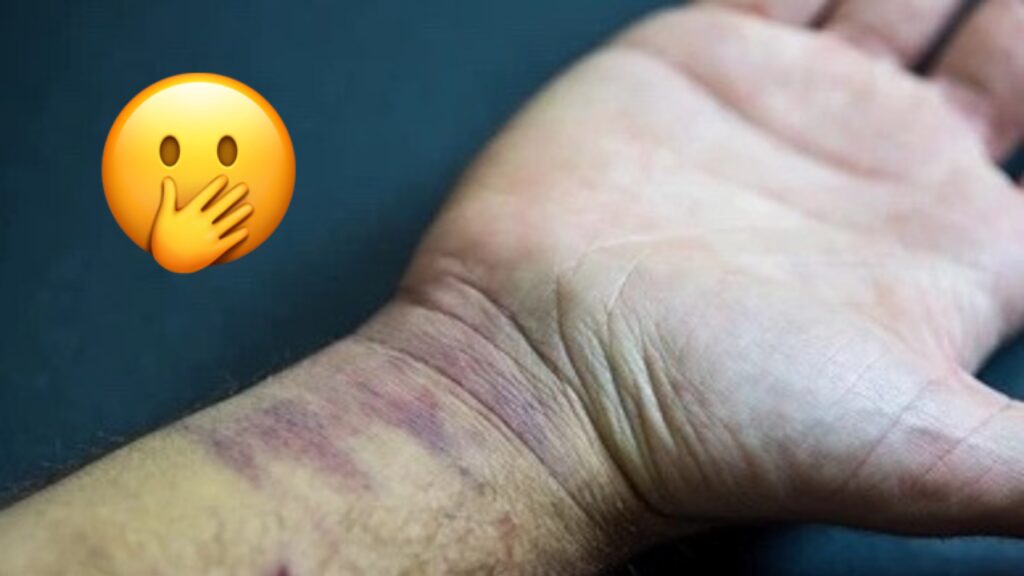
bruisingRaleigh North Carolina Carpal Tunnel Release Expert Johnny T. Nelson, MD hears this question often.  If you are asking this question, you are not alone and chances are you recently had a carpal tunnel release procedure.  Perhaps you had a traditional open carpal tunnel release, or perhaps you had the ultra-minimally invasive carpal tunnel release with real-time ultrasound guidance.


So is bruising normal?


The short answer to the question is: Yes!  Bruising is simply the human body’s response to surgery.

When Dr. Johnny T. Nelson, MD performs a carpal tunnel release, the human body and the skin, bones, and ligaments in the area do not “understand” what surgery is.  To these structures, surgery is seen as an injury.  In response to this, it is normal for the human body to bring fluid, blood, swelling, and redness to the area and response to the surgery.  This is normal.

But what is the bruising?  Where does it come from?


Bruising is simply the body taking the blood and fluid from the surgery location and breaking it down in preparation for clearing it out and sending it back to your liver.  Anyone that has fallen and sustained a “charley horse” or bad bruise understands this process.  Right after the injury, the site overall looks quite normal except for some swelling and may be some redness.  But the day after, and over the week following, bruising appears.  It is common for bruising to turn different colors, often going from purple to brown to yellow.  Eventually it will fade away completely, which is a sign that the body’s immune cells have eaten up and cleared away the blood cells that were left behind.

What if I have bruising on my palm and on my forearm?  What if the bruising is spreading?

This is also common after carpal tunnel release surgery.  It is very normal to have bruising in the palm as well as over the front of the forearm, at times even extending into the fingers or towards the elbow.  This does not mean that anything is wrong.  Some patients may even have bruising visible on the top of the hand or forearm.  It is also normal for the bruising to start close to the site of surgery and grow in size over the days and weeks following the procedure.

Why do some patients have more bruising than others?

This is difficult to understand.  Some patients do not bruise at all after carpal tunnel release.  Some patients bruise more, there are many reasons for this but most remain unclear.  Some patients are on blood thinners, and these patients should expect to have more bruising.  Again, this does not mean that there is a problem.

You have carpal tunnel syndrome?  Do you wake up at night, shaking her hands out?  Do your hands fall asleep during the day when performing certain activities?  If so, call 919-872-5296 to schedule an appointment with Dr. Johnny T. Nelson, MD, North Carolina Carpal Tunnel Specialist.

Is Bruising Normal After Carpal Tunnel Release? Read More »

Book An Appointment

* All indicated fields must be completed.
Please include non-medical questions and correspondence only.

Location Map: 3801 Wake Forest Road Raleigh, NC 27609
rue logo wt

OFFICE HOURS

Monday - Friday: 8:30 am - 4:30 pm

CONTACT US

Accessibility Toolbar

Scroll to Top